Every skipper needs to know where the boat is, where it’s going and what’s in the way. That’s navigation. And the tools you carry decide how well you can do it when things don’t go to plan.
In my airline career, we never trusted a single instrument. Every critical system had a backup, and often a backup for the backup. I bring the same mindset to sailing. Electronics are amazing, right up until the battery dies or the screen goes dark. A good skipper carries layers.
Here’s what I believe belongs on every boat, from a day sail on New York Harbor to a week-long charter in the Caribbean.
1. Paper Charts and Plotting Tools
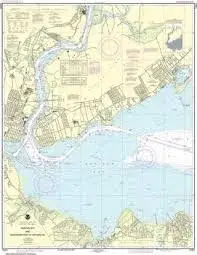
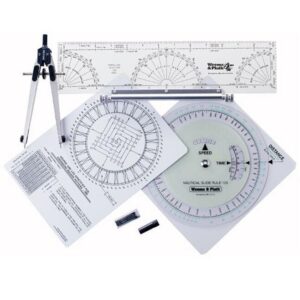
Yes, paper. It never runs out of battery, never freezes and shows you the big picture at a glance. Paper charts are still the foundation of good navigation, and they’re how we teach it in ASA 103 and 104.
What to carry:
- Charts or a chart book for your sailing area, at both harbor and coastal scales. Print-on-demand NOAA charts and regional chart books both work well.
- Dividers to measure distance on the chart.
- Parallel rulers or a course plotter to lay down courses and bearings.
- Soft pencils and an eraser. Mark lightly so you can erase and reuse the chart.
Practice plotting a course at the kitchen table this winter. It’s far easier to learn on dry land than in a building breeze.
2. Compasses
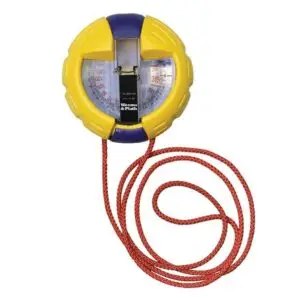
The compass is the oldest navigation tool on the boat. It’s still one of the most important. It needs no power, and it always works.
- Steering compass. Mounted where the helmsperson can see it. Learn to hold a course by compass, not just by pointing at something on shore. At night or in fog, it may be all you have.
- Handbearing compass. A small handheld compass for taking bearings on buoys, lighthouses and landmarks. Two or three bearings plotted on the chart give you a fix: your position, no electronics needed. It’s also the quickest way to tell if another vessel is on a collision course. If the bearing isn’t changing and the boat is getting closer, act early.
3. Electronics
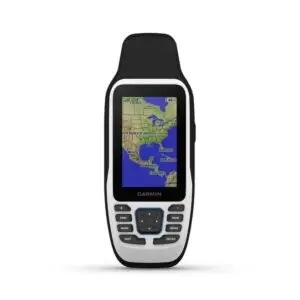
Modern electronics have made navigation easier and safer than ever. Use them. Just don’t let them do your thinking for you.
- GPS chartplotter. Shows your position on an electronic chart in real time. It’s a huge help with situational awareness, especially in busy waters. Keep the charts updated.
- Depth sounder. Tells you how much water is under the keel. Cross-check it against the chart, especially when anchoring or working close to shore.
- VHF radio with DSC. Your lifeline. Monitor Channel 16, and register for an MMSI number so the DSC distress button sends your position automatically with one push.
- AIS. Shows you nearby commercial ships, with their course, speed and closest point of approach. Many systems also broadcast your position to them. On New York Harbor, with ferries, tugs and container ships everywhere, AIS is a game changer.
- Phone or tablet navigation apps. Excellent as a backup chartplotter. Keep the device charged and in a waterproof case, and download your charts for offline use before you leave the dock.
4. Tide and Current Information

On our home waters this one matters a lot. Currents in New York Harbor and the Hudson can run hard. Plan against them and you’ll fight all afternoon. Plan with them and the boat practically sails itself home.
- Tide and current predictions. NOAA publishes them free online. Check them before every sail, and plan your departure and return around them.
- Eldridge Tide and Pilot Book. The yellow annual that East Coast sailors have relied on since 1875. Tide and current tables for The Battery, Hell Gate and The Narrows, plus current charts for New York Bay, all in one book that lives aboard.
- U.S. Coast Pilot. NOAA’s guide to local hazards, anchorages, bridges and regulations. Free to download.
- USCG Light List. Details every buoy, light and daybeacon, so you can identify what you’re looking at, especially at night.
- Local knowledge. Talk to sailors who know the area. Ask about shipping lanes, ferry routes and security zones. It’s one of the best reasons to sail with a club.
5. Backups and Basics
This is where the airline mindset really pays off. Ask yourself: if the main system fails, what’s my next move?
- Handheld VHF. If the boat loses power, or you end up in the dinghy, you can still call for help.
- Handheld GPS or a charged phone. A second, independent source for your position.
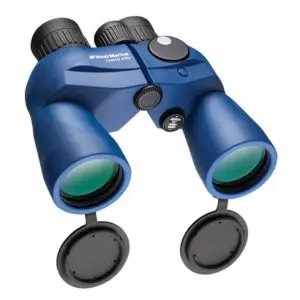
- Binoculars. Essential for reading buoy numbers, spotting traffic and identifying landmarks. A pair with a built-in compass does double duty.
- Spare batteries and a power bank. For everything above.
- A logbook. Write down your position, course and speed every hour or so. If the electronics fail, you can work out where you are from your last known position. It’s called dead reckoning, and it’s a skill every skipper should have.
The Skipper’s Navigation Checklist
Print this out and keep it with your gear.
- ☐ Paper charts or chart book for your area
- ☐ Dividers, parallel rulers or plotter, pencils
- ☐ Steering compass, checked and readable
- ☐ Handbearing compass
- ☐ GPS chartplotter with updated charts
- ☐ Depth sounder
- ☐ Fixed VHF with DSC, MMSI registered
- ☐ AIS
- ☐ Phone or tablet with offline charts, in a waterproof case
- ☐ Today’s tide and current predictions
- ☐ Coast Pilot and Light List for your area
- ☐ Handheld VHF
- ☐ Handheld GPS or backup phone
- ☐ Binoculars
- ☐ Spare batteries and a power bank
- ☐ Logbook
Tools Are Only Half the Story
The best gear in the world won’t help if you don’t know how to use it. Navigation is a skill, and you build it with practice and good coaching.
That’s exactly what we teach at True North. In ASA 103 Coastal Cruising and ASA 104 Bareboat Cruising, you’ll plot courses, take bearings, read tide and current tables and run a boat the way a real skipper does. Every instructor is a USCG-licensed captain. Classes are small, and you learn on New York Harbor, one of the most demanding and rewarding places to sail anywhere.
We offer every ASA course from beginner to advanced, and we’re back on the water in April. Check our 2027 schedule at sailtruenorth.com and grab your spot.
See you on the water.
Steve Sedlock, Director, True North Sailing Center